

INTRODUCTION
How Dental Crowns Restore Your Smile
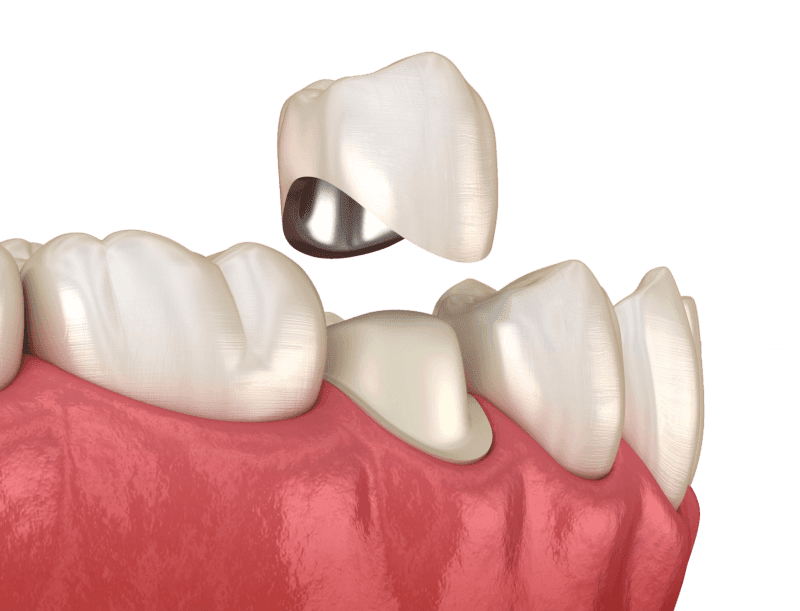
Using computer-assisted technology to make porcelain-based dental crowns is one of the most exciting breakthroughs in advanced dentistry, and patients in Ingersoll, Ontario can have it done here. Where older techniques needed several appointments, a CEREC crown is completed in a single one, and modern methods also mean fewer anesthetic injections. A dental crown is a "cap" that goes over a tooth that is broken, damaged, stained, decayed, or no longer shaped correctly after a root canal. Crowns have other jobs too: they can hold up a dental bridge, top off a tooth implant, or be used for particular cosmetic or aesthetic reasons.
FEATURES
The Steps in Placing a Tooth Crown
Using computer-assisted technology to make porcelain-based dental crowns is one of the most exciting breakthroughs in advanced dentistry, and patients in Ingersoll, Ontario can have it done here. Where older techniques needed several appointments, a CEREC crown is completed in a single one, and modern methods also mean fewer anesthetic injections. A dental crown is a "cap" that goes over a tooth that is broken, damaged, stained, decayed, or no longer shaped correctly after a root canal. Crowns have other jobs too: they can hold up a dental bridge, top off a tooth implant, or be used for particular cosmetic or aesthetic reasons.
Placing a CEREC Crown, Step by Step
Shape the Tooth
1
Filing and shaping the tooth is the first step when it is being prepared for a CEREC crown.
Digital Impression and Crown Design
2
The next step is a digital impression, taken with a camera. The camera sends a 3-D optical image of the prepared tooth to the dentist's computer, where the crown is designed with CAD/CAM technology. The finished specifications then go to a milling machine.
Mill and Bond
3
From there, a milling machine with diamond-coated instruments carves the restoration out of a solid block of hard ceramic. We try the crown in your mouth and check the fit, the occlusion and the look of it. When everything is acceptable, the crown is bonded onto your tooth. All in a single appointment!
MATERIAL
Dental Crown Materials
Ceramic is the main material used for dental crowns. When the temperature in your mouth changes, ceramic expands and contracts at close to the same rate as enamel and dentin. For several weeks after a new crown goes in, hot and cold may cause mild sensitivity. That feeling is temporary and goes away by itself, and the crown should soon feel natural and comfortable in your mouth. A few things guide the choice of crown material: where the tooth sits and what condition it is in, how many teeth show when you smile, and the shade or colour of the teeth beside it.
Book Your Appointment
We'll get back to you within one business day.

BENEFITS
Main Benefits of Dental Crowns
Bacteria, food particles and acid cannot get at a weakened tooth once a crown is on it. The crown covers the whole tooth, so nothing reaches the tooth underneath and no further damage is done.
5 main benefits of dental crowns
• Protects a weak tooth from breaking
• Guards a root canal-treated tooth against further breakage
• Keeps existing cracks from getting more severe
• Rebuilds a tooth that is badly damaged or broken
• Improves the appearance of discoloured and misshapen teeth (smile makeover)
If a dental crown is something you are weighing up, book a consultation at Ingersoll Dental Centre in Ingersoll, Ontario. Our dentists will look over your teeth and tell you plainly whether a crown is the right treatment for you.
BENEFITS
What a dental crown involves.
Will my crown blend in with my other teeth?
A modern ceramic crown is shade-matched with care to the teeth on either side of it. Most people cannot tell a crown from a natural tooth, and that goes double for CEREC crowns, which are custom-milled for a precise match. For a front tooth, or any time appearance worries you, we can go through the shade options together before the crown is made.
How does a same-day crown compare with a traditional one?
The ceramic in a same-day CEREC crown is the same high-quality material used in a traditional lab-made crown; the difference lies in how the crown is made rather than what it is made from. For most patients, CEREC crowns match traditional crowns for longevity and appearance, and they can be fitted in one visit. A traditional lab-made crown may still be the right call for very complex cases.
Is There a Difference Between Dental Crowns and Caps?
There is no real difference between the two. "Dental cap" is just a second name for a dental crown, and "dental crown" happens to be the term most people use today.
How Many Years Will a Dental Crown Last?
As long as you keep up good oral hygiene, a dental crown lasts up to 15 years on average, and some go well past the 15-year mark.
Will people be able to tell I have a crown?
Most people can't spot the difference. Modern ceramic crowns are shade-matched with care to your nearby teeth, and CEREC crowns are custom-milled for an especially close match. If appearance is a particular concern, for example on a front tooth, we'll review the shade choices together before your crown is made.
Is it possible to get decay under a crown?
Yes. Decay can't affect the crown itself, though the tooth under it is still vulnerable, especially where the crown edge meets your tooth near the gums. Keep brushing and flossing that spot with the same care you give your other teeth. At your regular check-ups, we look closely at the crown margin so any problem is caught early.
What do I do if a crown falls out?
First, don't worry: crowns sometimes come loose, and it's a fixable problem. Hold on to the crown, clean it, and phone us right away. Try not to chew on that side until we see you. Most of the time the original crown can be re-cemented, though a replacement may be needed if the tooth under it has changed.
How do same-day crowns compare to traditional ones?
Both kinds of crown use the same high-quality ceramic. A CEREC crown is simply made a different way, in a single appointment, rather than in a dental lab. For most people it lasts as long and looks just as natural, and you skip the second visit. If your case is very complex, a lab-made crown may still be our recommendation.
